


Wildlife Parks in India
“Jungle”—the Hindi word for wilderness in India—was adopted into the English language, and over time has come to denote lush, tropical forests everywhere.









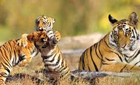
“Jungle”—the Hindi word for wilderness in India—was adopted into the English language, and over time has come to denote lush, tropical forests everywhere. Yet India’s diverse wilderness areas encompass far more. In addition to rainforests, they include moist and dry deciduous forests, thorn forests, deserts, mangroves, grasslands, and coniferous forests in the Himalayas, not to mention a variety of freshwater and marine habitats. India’s diverse landscapes are home to numerous threatened and critically endangered species, including the Asiatic lion, Asian elephant, tiger, white-rumped vulture, Asian one-horned rhinoceros, and water buffalo. Many species of deer, antelopes, wild dogs, cats, and bears also live here. There is a vast and diverse array of reptiles, amphibians, and birds, some of which are still unknown to science. The hunger of finding such species and to see the rare gifts of nature, attracts tourist to come and visits this side of India. The Bandhavgarh National Park, in Madhya Pradesh, Ranthambhore National Park & Sariska Tiger Reserve in Rajathan, Jim Corbett National Park in the North and Sundarbans in West Bengal are few parks which are quite popular with overseas travelers.
Dibru-Saikhowa National Park
Kaziranga National Park
Kanha National Park
Blackbuck National Park, Velavadar
Desert National Park
Gir Forest National Park
“Jungle”—the Hindi word for wilderness in India—was adopted into the English language, and over time has come to denote lush, tropical forests everywhere.


India is the land of diversity and caters to all tourists who are looking for adventure activities during their visit to India.

E-mail: -
incoming@ptgforindia.com
Website: -
www.ptgforindia.com

Copyright © Professional Travel Guidance. All Rights Reserved Powered by The Web Design Solutions